Post Surgical Fajas — Stage 1, 2 & 3 | The Pink Room Shapewear
Medical-Grade Post-Surgical Compression

Post Surgical Fajas: Your Complete Guide to Stages 1, 2, and 3

Your Recovery Deserves More Than Generic Compression — It Deserves a System Built for Every Stage

At The Pink Room Shapewear, we don't sell one-size-fits-all garments. We guide you through a medical-grade compression protocol — from the swelling of week one to the sculpting of month four — because your body changes after surgery, and your faja should change with it.

Post-surgical faja recovery system
Stage 1 · Weeks 1–3
Stage 2 · Week 3 – Month 2
Stage 3 · Month 2+
Why It Matters

Why Post-Surgical Fajas Are Not the Same as Regular Shapewear

A post-surgical faja is a medical compression garment engineered to manage swelling, support tissue reattachment, and protect your results after procedures like liposuction, tummy tuck, or BBL.

Regular Shapewear

Aesthetic Only
  • Purpose: Smooths silhouette under clothing
  • Compression: Uniform, fashion-focused pressure
  • Medical Use: NOT approved for post-surgical recovery
  • Does NOT manage swelling or lymphatic drainage
  • Can interfere with proper healing if used post-surgery

Post-Surgical Faja

Medical Grade
  • Purpose: Medical recovery & tissue support
  • Compression: Graduated, stage-specific pressure
  • Medical Use: Clinically designed for post-op recovery
  • Controls edema and supports lymphatic drainage
  • Helps skin reattach and prevents seromas
StageWhen to Wear ItPrimary BenefitCompression Level
Stage 1Weeks 1–3Gentle, consistent compression that reduces inflammationGentle
Stage 2Week 3 – Month 2Medium-to-high compression to sculpt and refine contourModerate–Firm
Stage 3Month 2 onwardFirm daily compression for long-term waist definitionFirm
Stage 1 Gentle Compression
When to Wear Weeks 1–3
Primary Benefit Reduces inflammation & fluid retention
Stage 2 Moderate–Firm
When to Wear Week 3 – Month 2
Primary Benefit Sculpts and refines contour
Stage 3 Firm
When to Wear Month 2 onward
Primary Benefit Long-term waist definition
Stage 1 · Weeks 1–3

Stage 1 Post-Surgical Fajas — Built for the Hardest Part of Recovery

The first three weeks after surgery are when your body needs the most protection. Swelling peaks. Fluid accumulates. Tissues begin the slow process of reattaching to your new contours. A Stage 1 faja delivers soft but consistent medical compression designed for exactly this phase. It's not about squeezing — it's about stabilizing.

  • Powernet-grade fabric soft enough for freshly operated skin
  • Lateral closures for easy on-and-off without straining
  • Open gusset design for bathroom convenience
  • Breathable panels that reduce heat buildup
Why The Pink Room's Stage 1 selection is different We carry garments from specialized manufacturers — including our BlueBalance collection — built with patented medical-grade compression fabrics. These aren't Amazon shapewear rebranded as "post-surgical." Every Stage 1 faja we offer has been tested against real recovery protocols and recommended by surgeons who understand staged compression.

Recommended wear: 24 hours/day for first 2–3 weeks

Shop Stage 1 Fajas
Stage 1 post-surgical faja for immediate recovery
24h
Daily Wear
Soft Powernet Lateral Closure Open Gusset
Stage 2 · Week 3 – Month 2

Stage 2 Fajas — Where Recovery Meets Results

By week three, the worst of the swelling has passed — but healing is far from over. Internally, your body is still remodeling collagen, draining residual fluid, and settling into its new shape. This is the stage where compression shifts from protection to refinement. A Stage 2 faja applies moderate-to-firm pressure that molds your contour, controls residual swelling, and keeps skin adhering evenly to the treated tissue underneath. Skipping this stage — or switching too late — is one of the most common mistakes patients make. And it shows in the results.

  • Higher compression ratio — structured to sculpt
  • Double-reinforced abdominal panels
  • Invisible-under-clothing design
  • Adjustable closures as swelling decreases
Why The Pink Room takes Stage 2 seriously Most stores sell a single "post-surgery" garment and call it a day. We carry Stage 2 fajas specifically designed for different procedures — BBL recovery, abdominal lipo, full-body contouring — because compression needs are not universal. A garment for BBL recovery needs open-butt design to preserve fat transfer. A garment for abdominal lipo needs reinforced front panels and high-waist support. We match the garment to the procedure, not the other way around.

Recommended wear: 12–20 hours/day

Shop Stage 2 Fajas
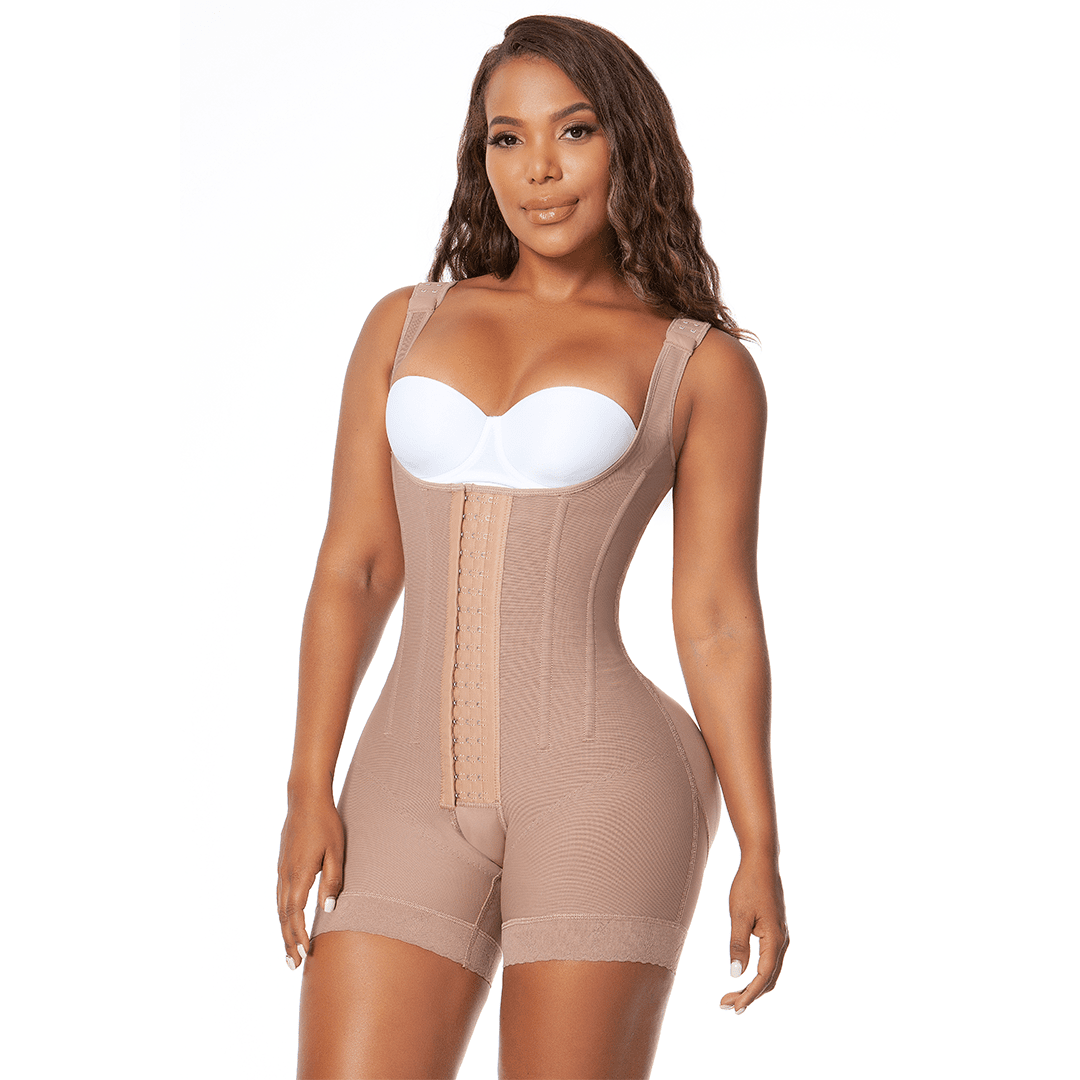
Stage 2 contouring faja for sculpting and refinement
12–20h
Daily Wear
Sculpting Panels Reinforced Core Adjustable
Stage 3 · Month 2 Onward

Stage 3 Fajas — Lock In Your Results for the Long Run

Two months after surgery, most patients feel recovered — but the body is still doing invisible work. Collagen continues remodeling for up to six months. Skin elasticity keeps adjusting. And without consistent support, minor contour irregularities can still develop. A Stage 3 faja isn't about recovery anymore. It's about definition. These garments deliver firm, daily-wear compression that acts as a waist cincher, contour maintainer, and posture supporter — all in one. Think of Stage 3 as the garment that protects the investment you made in surgery and recovery.

  • High compression that defines the waist
  • Ultra-durable fabric for months of wear
  • Waist-trainer-level shaping integrated
  • Comfortable for 8–12 hours of daily use
Why most patients underestimate Stage 3 Surgeons focus their guidance on the first 6–8 weeks. After that, patients are on their own. But compression science doesn't stop at week eight. The Pink Room carries Stage 3 fajas specifically because we've seen how much they matter — in smoother results, better waist definition, and higher patient satisfaction months after surgery.

Recommended wear: 8–12 hours/day

Shop Stage 3 Fajas
Stage 3 definition faja for long-term results
8–12h
Daily Wear
High Compression Waist Definition Posture Support

Not Sure What Size to Wear After Surgery? We'll Help You Find It.

Post-surgical sizing is nothing like regular clothing sizing. Swelling changes your measurements week to week. The wrong size means uneven compression, rolling fabric, and slower healing. Use our post-surgical sizing guide — or contact us directly. Our team has helped thousands of patients find the right fit at every stage of recovery.

Complete Your Recovery Kit

Shop by Recovery Stage

Complete Your Recovery Kit

Add Abdominal Foam Board · Lipo Foam · Surgical Bra

View Accessories
FAQ

Frequently Asked Questions About Post-Surgical Fajas

Real answers for real recovery questions — from staging timelines to sizing after surgery.

When should I switch from a Stage 1 faja to Stage 2?
Most surgeons recommend transitioning between weeks 2 and 4, depending on your swelling levels and procedure type. Switching too early can cause swelling to return. Switching too late can delay contouring. If you're unsure, take a photo of your current compression and send it to our team — we'll help you assess whether you're ready to move to Stage 2.
Can I skip Stage 1 and go straight to Stage 2 or Stage 3?
No. Each stage exists for a specific phase of internal healing. Stage 1 garments are designed for fresh, inflamed tissue — they use softer fabrics, gentler closures, and compression calibrated for peak swelling. Jumping to a higher-compression garment too soon can restrict circulation, increase bruising, and actually slow your recovery. Follow the stages. Your body will thank you.
Why do I need a post-surgical faja instead of regular shapewear?
Regular shapewear is designed for aesthetics — it smooths lines under clothing. A post-surgical faja is engineered for medical recovery. It applies controlled, graduated compression that reduces edema, supports lymphatic drainage, prevents fluid pockets (seromas), and helps skin reattach evenly to underlying tissue. Without proper post-surgical compression, you risk prolonged swelling, contour irregularities, and fibrosis. The garments look similar on the surface. The function is completely different.
How do I choose the right size if I'm still swollen?
This is one of the most common sizing mistakes. Your measurements will change significantly between week 1 and week 6. At The Pink Room, we recommend measuring at the time of purchase and choosing a garment with adjustable closures (hook-and-eye rows or adjustable straps) so the fit evolves with your body. If you're between sizes, our specialists can guide you based on your procedure, timeline, and current swelling.
What's the difference between a Stage 2 and Stage 3 faja?
Stage 2 fajas provide moderate compression designed for active healing — they control residual swelling and begin shaping your contour. Stage 3 fajas deliver higher compression for definition and daily sculpting, worn after most internal healing has completed. Stage 2 is about recovery. Stage 3 is about results.
How many hours a day should I wear my Stage 3 faja?
Stage 3 garments are designed for 8–12 hours of daily wear. Unlike Stage 1, you don't need to sleep in them. Most patients wear their Stage 3 faja during the day — under work clothes, running errands, or exercising lightly — and remove it at night.
Can I use a Stage 3 compression garment if I haven't had surgery?
Yes. Stage 3 fajas function as high-compression daily shapewear. Many of our customers wear them for waist definition, posture support, and contouring without any surgical history. The compression is firm enough to sculpt but comfortable enough for all-day wear.

Want to understand the medical science?

Compression Garment After Lipo Surgery: The Complete Buyer's Guide for Faster Recovery and Better Results

Read the Guide